

Jamun Honey
FBOJH
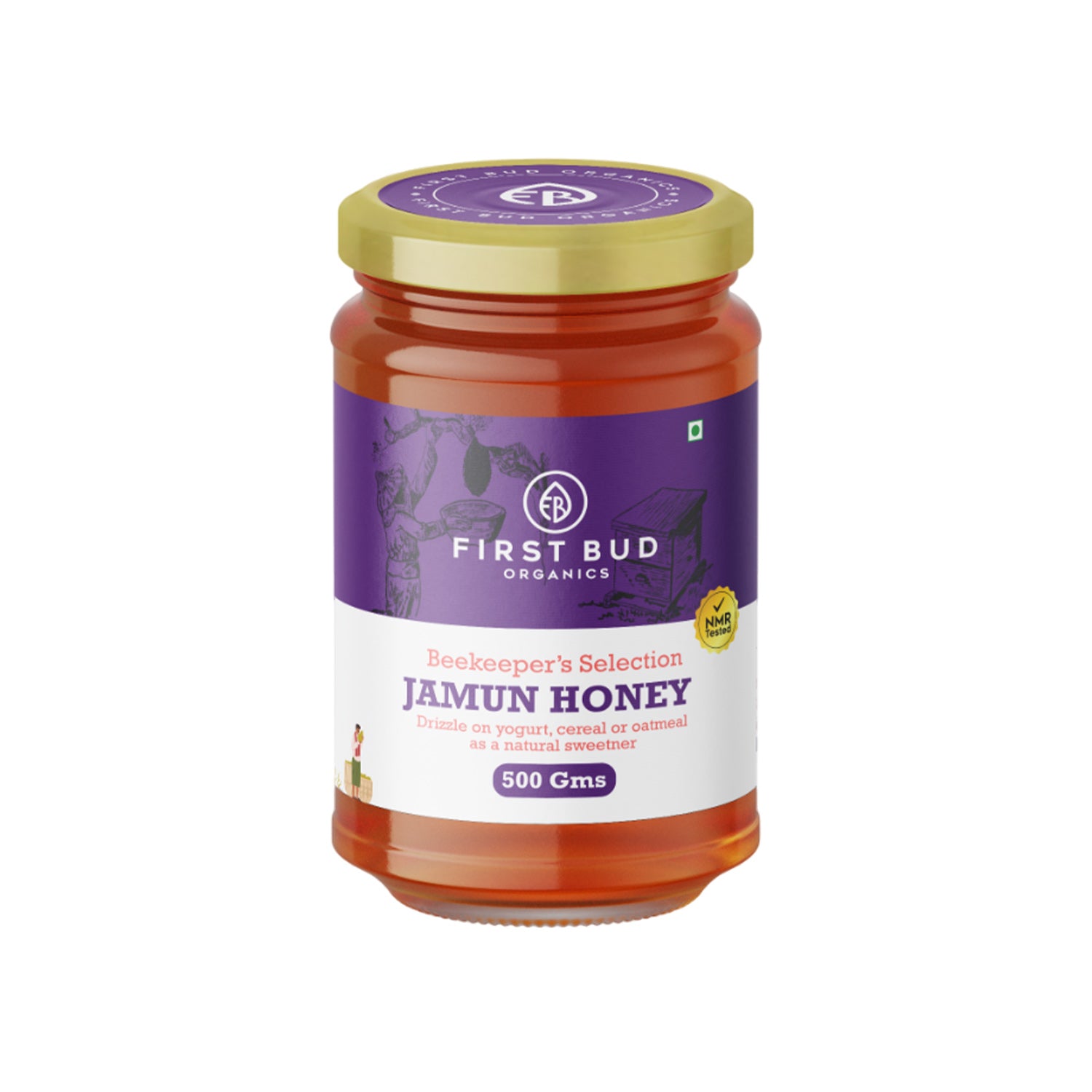
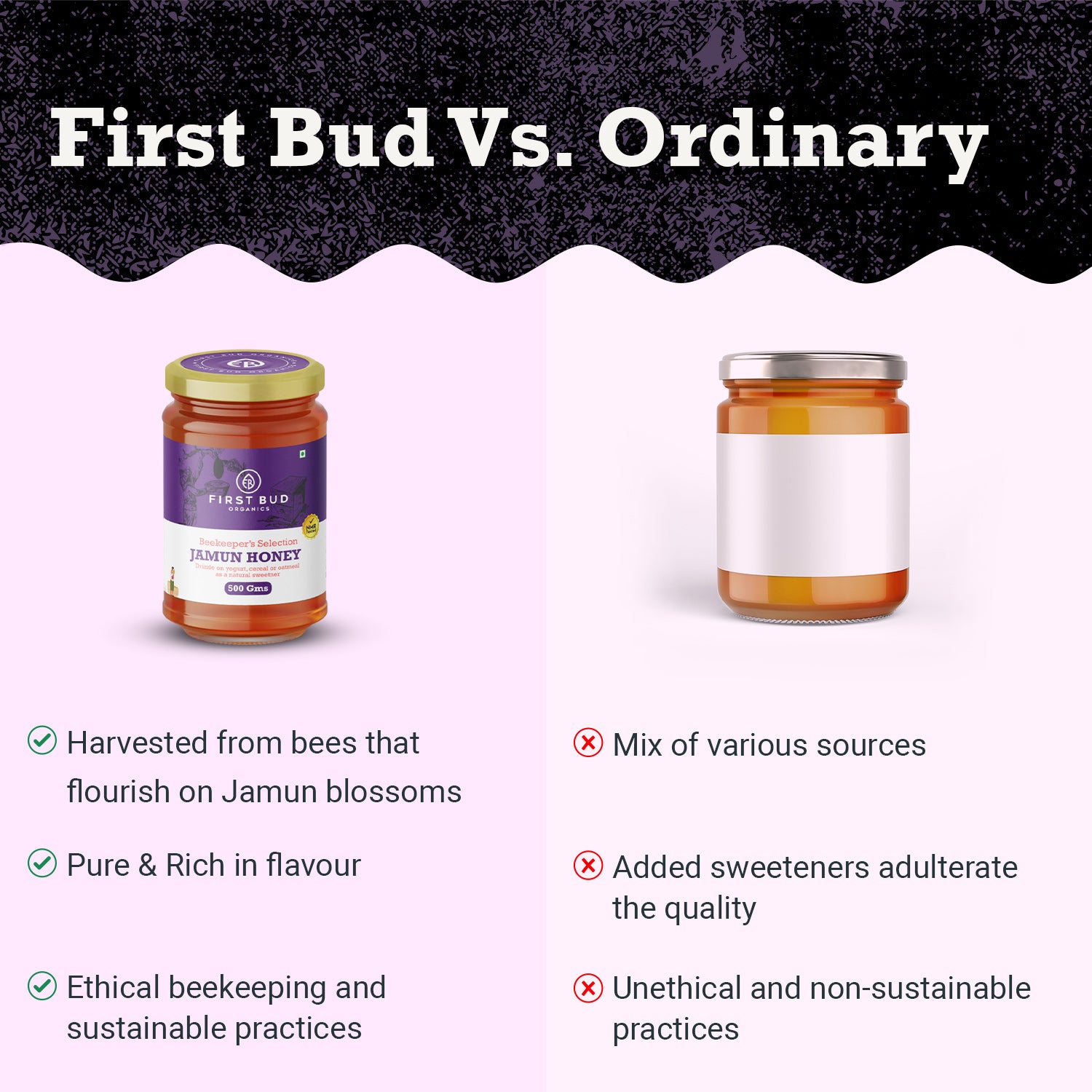
Jamun Honey is made by bees that forage primarily on Jamun (Indian Blackberry) blossoms. The result is a distinctly darker, more intense honey with a slightly tangy depth of flavour and a nutritional profile that is particularly associated with blood sugar support — something that makes this a very special honey in the Indian context.
- Regular price
-
Rs. 545.00 - Regular price
-
Rs. 545.00 - Sale price
-
Rs. 545.00
Couldn't load pickup availability
Description
Not All Honeys Are the Same — Jamun Honey Is Genuinely Different
Multi-flower honey is wonderful and our Pahadi Honey is a great example. But single-origin blossom honeys have a specific character that comes entirely from the flowers the bees visit. Jamun — the Indian blackberry — is one of the most nutritionally significant of these blossom sources because the Jamun tree itself has a long history of use in Ayurvedic medicine, particularly around blood sugar management.
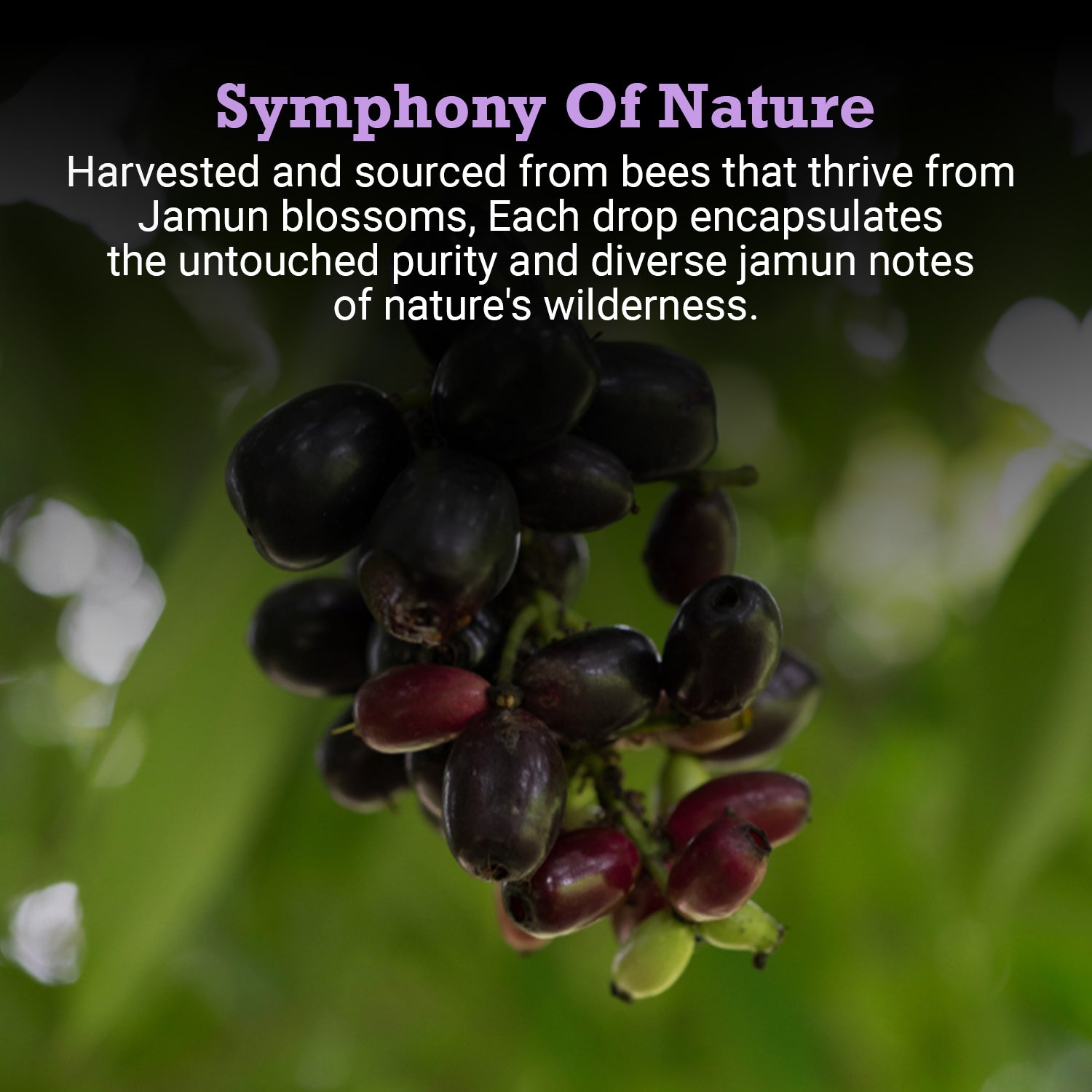
When bees forage on Jamun blossoms, they collect and process the nectar in ways that concentrate many of the same beneficial plant compounds found in the Jamun fruit and seeds. The resulting honey has a darker colour, a richer, slightly tangy flavour profile and a specific antioxidant and phytocompound composition that is different from lighter multi-flower honeys.
The Blood Sugar Connection — Why Diabetics Reach for Jamun Honey
Jamun fruit has been used in Ayurvedic and traditional Indian medicine for centuries specifically for managing blood sugar. The fruit, seeds and bark of the Jamun tree all contain compounds like jamboline and jambosine that are studied for their ability to slow glucose absorption and improve insulin sensitivity. Jamun Honey, made from Jamun blossom nectar, carries a relevant but gentler version of this phytocompound profile.
This does not mean diabetics can consume Jamun Honey freely — it is still a honey and contains natural sugars. But as a substitution for refined sugar or commercial honey, it is genuinely a better choice for blood sugar management when used in appropriate amounts with a doctor's guidance.
How to Use Jamun Honey
-
Morning warm water: One teaspoon in warm water is especially beneficial for people monitoring blood sugar as the honey's compounds work best on an empty digestive tract.
-
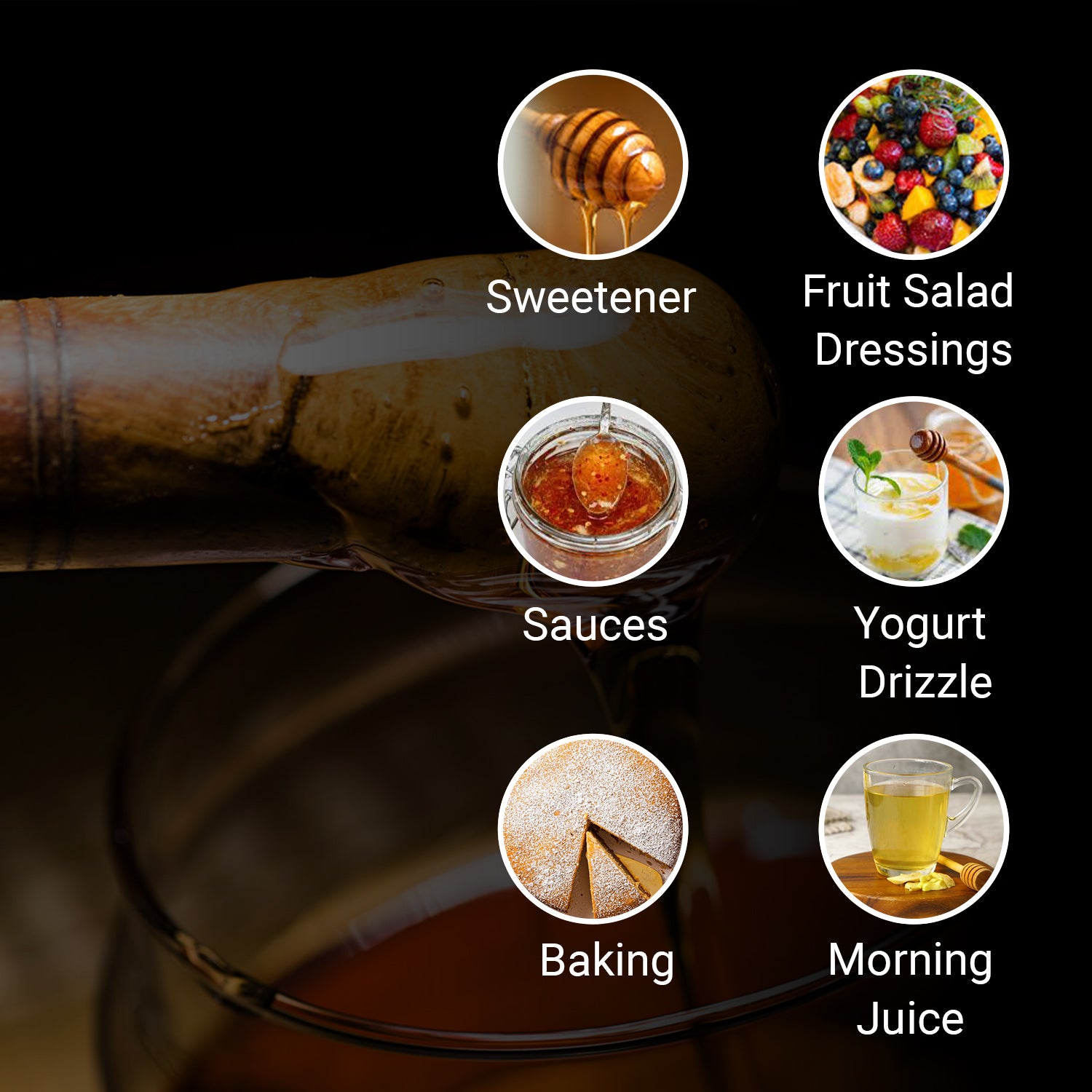
As a sweetener: Replace refined sugar or commercial honey with Jamun Honey in tea, smoothies or oatmeal.
With Amla or Giloy: Traditional Ayurvedic combinations use Jamun Honey with other blood sugar-supporting herbs for a synergistic effect.
Key Features
- Sourced from Jamun Flower Blossom Hives Only
- Raw, Unheated and Naturally Rich
- Particularly Beneficial for Blood Sugar Management
- Deep Dark Colour — Indicator of High Nutrient Density
- As Seen on Shark Tank India
Benefits
Blood Sugar Support
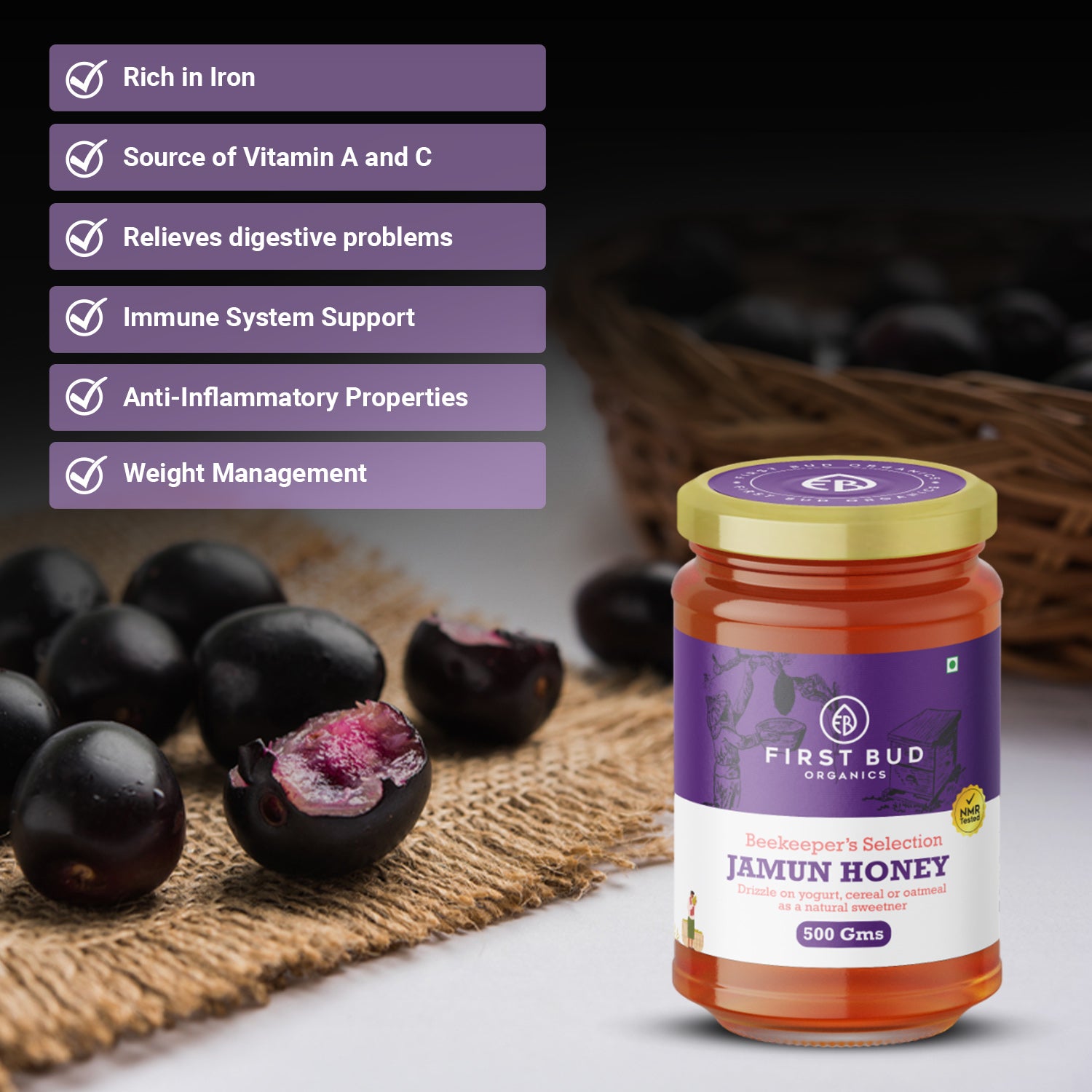
Jamun honey contains phytocompounds derived from Jamun blossom nectar that are associated with slower glucose absorption and improved insulin sensitivity. While it is not a diabetes treatment, it is a meaningfully better sweetener choice than refined sugar for anyone managing blood glucose.
Powerful Antioxidants
The dark colour of Jamun honey is a direct indicator of its high polyphenol content. Dark honeys consistently test higher in antioxidant compounds than lighter honeys. These antioxidants fight oxidative stress and support long-term cellular health.
Digestive Health
Like all raw honey, Jamun honey contains natural prebiotics and enzymes that support the gut microbiome. The slightly acidic nature of Jamun honey also helps maintain a healthy stomach pH and may reduce acid reflux in some people.
Natural Antimicrobial Action
Raw honey's natural hydrogen peroxide content and low water activity make it hostile to most bacteria and fungi. Jamun honey's additional polyphenols add to this antimicrobial effect, making it useful for treating minor cuts, sore throats and oral health maintenance.
Liver and Detox Support
In Ayurvedic tradition, Jamun is associated with liver health and blood purification. Jamun honey, while a less concentrated source of these benefits than Jamun seeds or bark, still carries relevant plant compounds that support liver function with regular use.
Ingredients
What's Inside
100% Pure Jamun Blossom Honey. Raw and unheated. Single-origin blossom honey.
Bees primarily forage on Jamun blossoms to produce this specific varietal honey.
Source Jamun (Indian Blackberry) blossom hives
Processing Raw, cold extracted, never heated
Colour Noticeably darker than regular honey — naturally so
Taste Rich, slightly tangy, deeper flavour profile than light honeys
Crystallisation Natural — expected in raw honey. Warm gently to re-liquefy.
Important Information
Sourcing Hives placed near Jamun orchards and forest areas during Jamun blossoming season.
Net Weight As per pack
Shelf Life 24 months when stored correctly at room temperature.
Storage Room temperature, tightly sealed, away from direct sunlight.
Children Safe for children above 1 year. Not for infants.
Safety Information
- Take 1 teaspoon in warm water on an empty stomach in the morning for best absorption of the blood sugar-supporting compounds.
- Use as a direct sugar substitute in tea, coffee or smoothies. Add after the liquid cools slightly.
- Can be taken with Amla juice or Giloy for a traditional Ayurvedic blood sugar support combination.
- For skin: Apply a thin layer topically, leave 15 to 20 minutes and rinse with cool water.
Direction
- Just like any other honey, Jamun honey can be used as a natural sweetener. You can drizzle it over pancakes, waffles, yogurt, oatmeal, or cereal for added sweetness.
Disclaimer
Please Read
Jamun Honey is a natural food product and is not intended to diagnose, treat, cure or prevent any disease including diabetes.
Diabetics must consult their doctor before substituting Jamun Honey for other sweeteners as it still contains natural sugars that affect blood glucose.
Do not give honey to infants below 1 year. Safe for all older age groups.
Natural crystallisation is a sign of purity. Warm gently in warm water to re-liquefy.
Shipping Information
For orders below INR 499, minimal charges apply; free shipping for orders above INR 500. Delivery within 4-7 business days, longer for remote locations or international orders, not available on holidays. No hidden charges; address changes possible before dispatch.


Jamun Honey
- Regular price
-
Rs. 545.00 - Regular price
-
Rs. 545.00 - Sale price
-
Rs. 545.00
Jamun Honey
Frequently Asked Questions
How should I use Jamun Honey every day?
One teaspoon in warm water on an empty stomach in the morning is the most effective way to use Jamun honey. You can also use it as a natural sweetener in tea, add it to smoothies or use it on bread and oatmeal. Use it as a one-to-one substitution for refined sugar wherever you would normally use sugar.
Why is Jamun Honey darker than regular honey?
The dark colour comes from the high polyphenol content derived from Jamun blossom nectar. In honey, darker colour directly correlates with higher antioxidant concentration. Jamun honey's dark shade is a natural indicator of its nutrient density, not a sign of any quality issue.
Is Jamun Honey good for diabetes?
Jamun Honey contains phytocompounds from Jamun blossom nectar that are associated with blood sugar regulation, making it a better sweetener choice than refined sugar for people managing blood glucose. However it is not a treatment for diabetes and still contains natural sugars. Diabetics should consult their doctor about appropriate consumption amounts and monitor their blood sugar response.
What is Jamun Honey and where does it come from?
Jamun Honey is a single-origin varietal honey produced by bees that primarily forage on Jamun (Indian Blackberry) blossoms. The nectar from Jamun flowers creates a honey with a distinctively darker colour, slightly tangy taste and a specific phytocompound profile that reflects the medicinal properties of the Jamun plant.
Is Jamun Honey the same as regular honey with Jamun added?
No. Jamun Honey is not a mixture of honey and Jamun juice or extract. It is a natural single-origin honey produced entirely by bees that forage on Jamun blossoms. The compounds from the Jamun plant reach the honey through the bees' natural nectar collection and processing. There is no post-production mixing involved.