

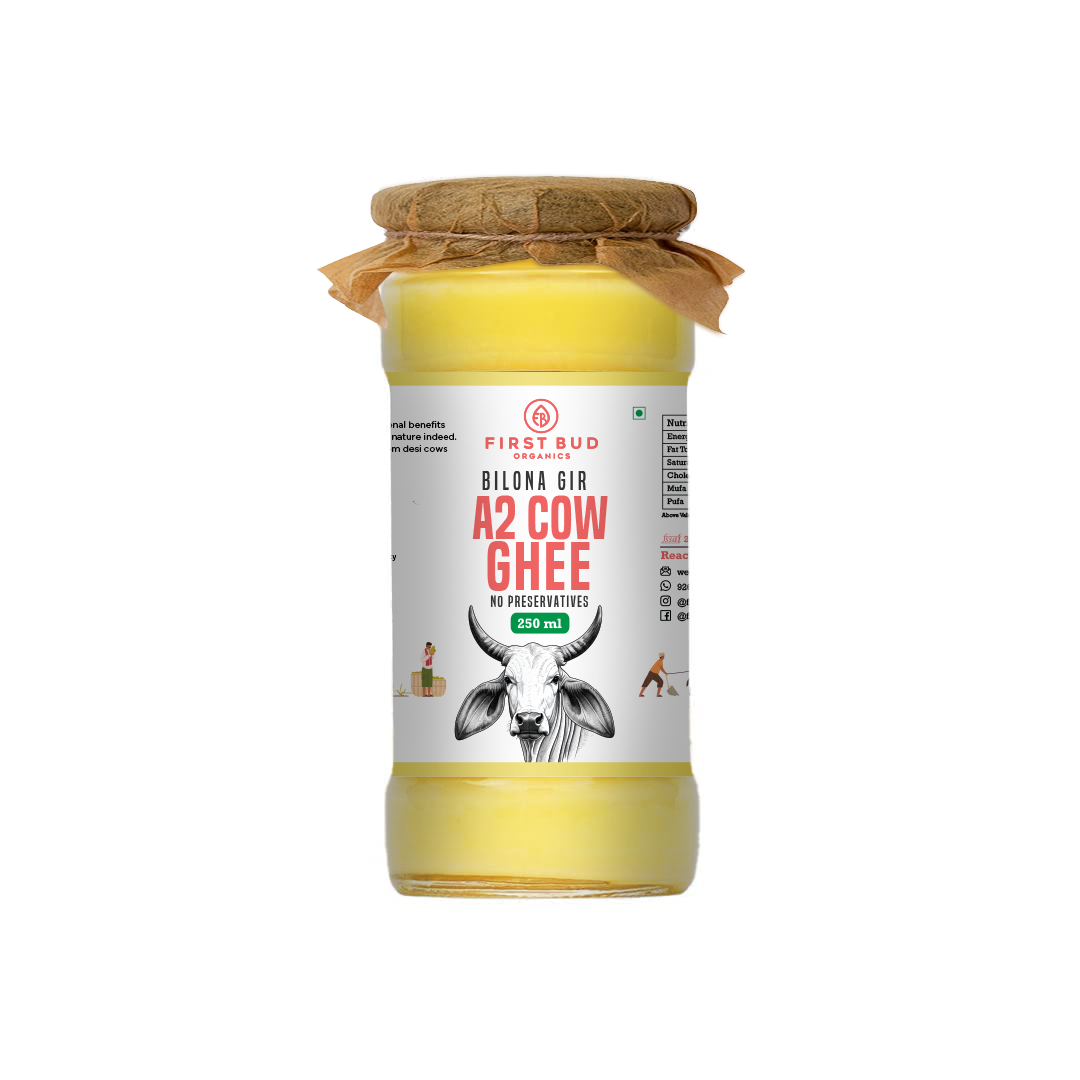
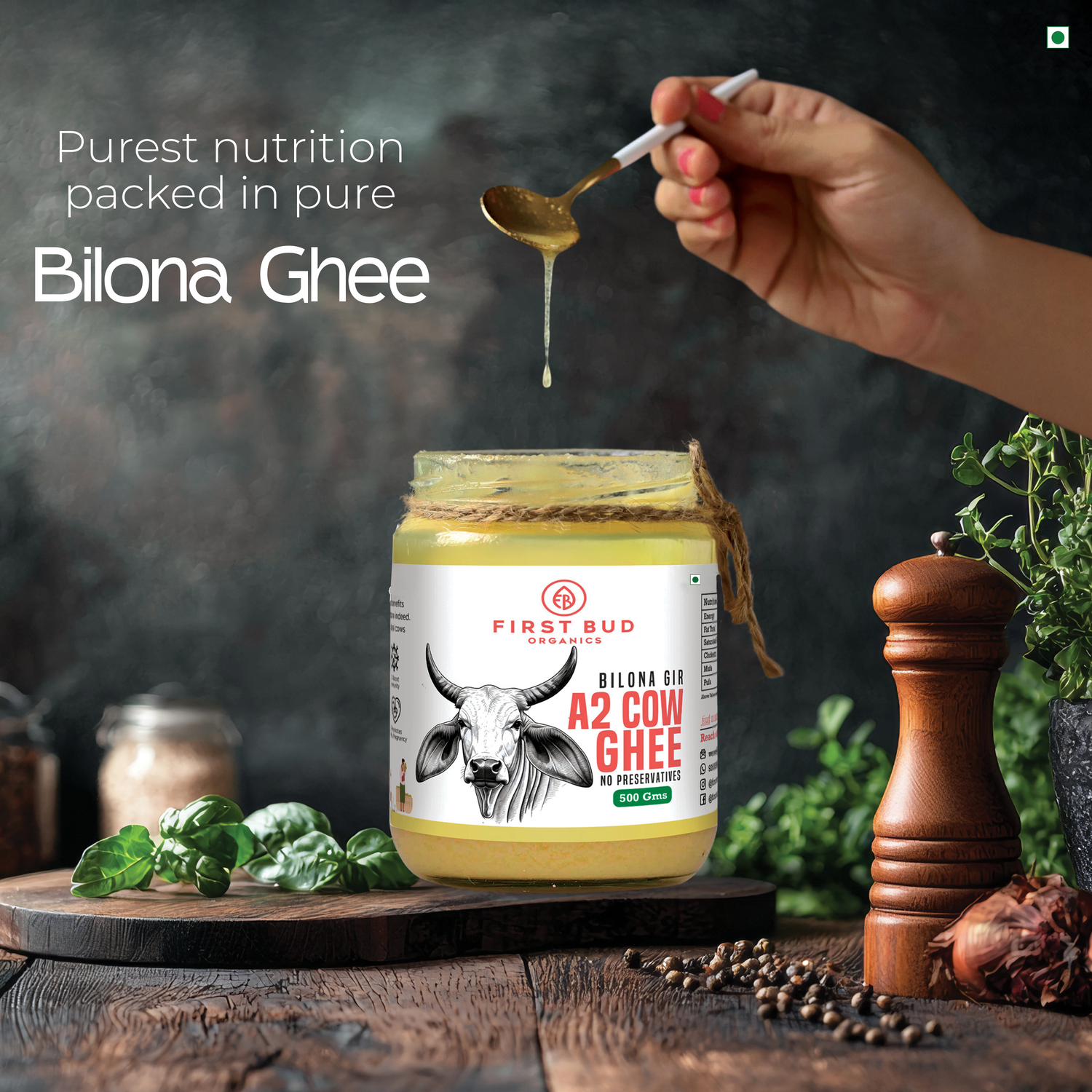
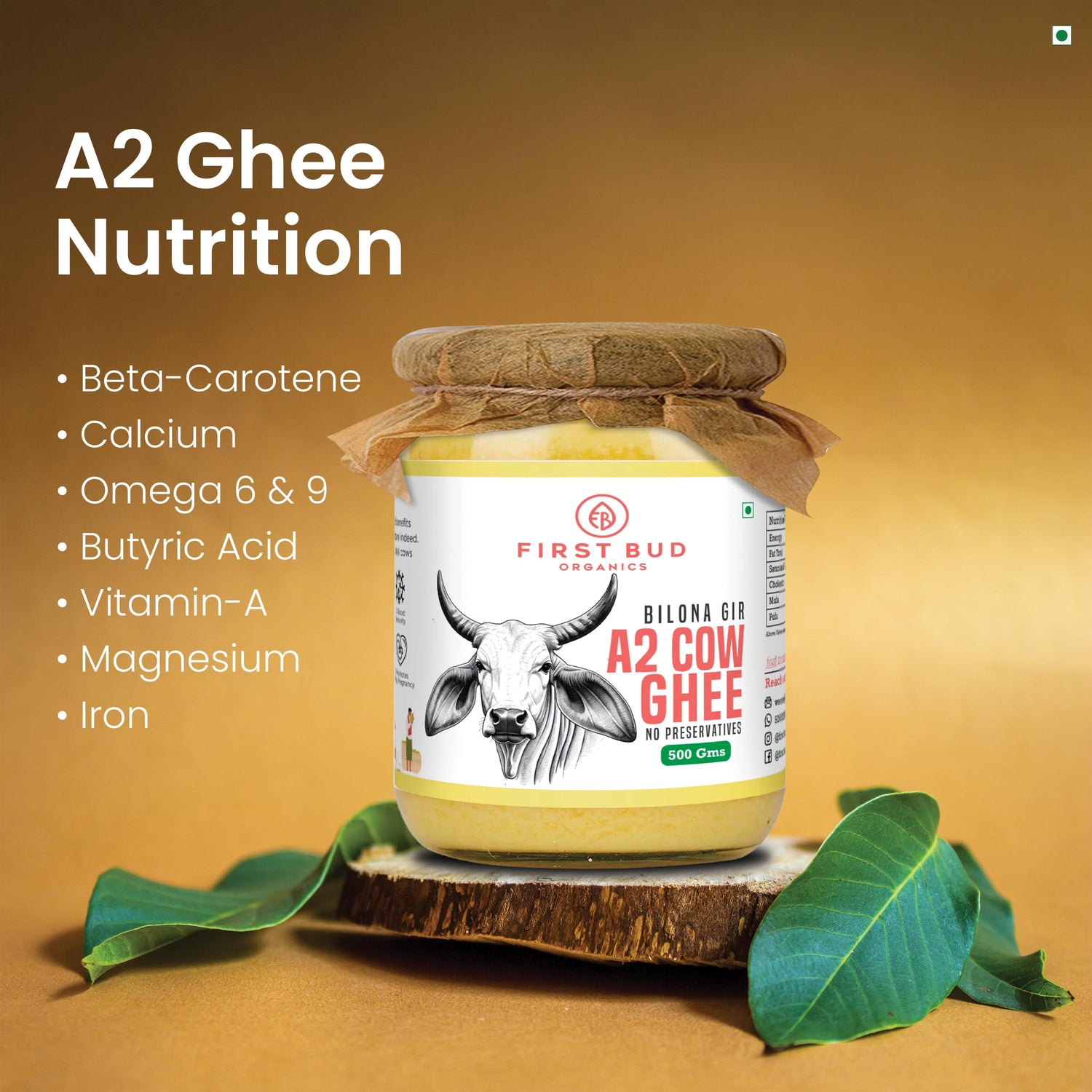

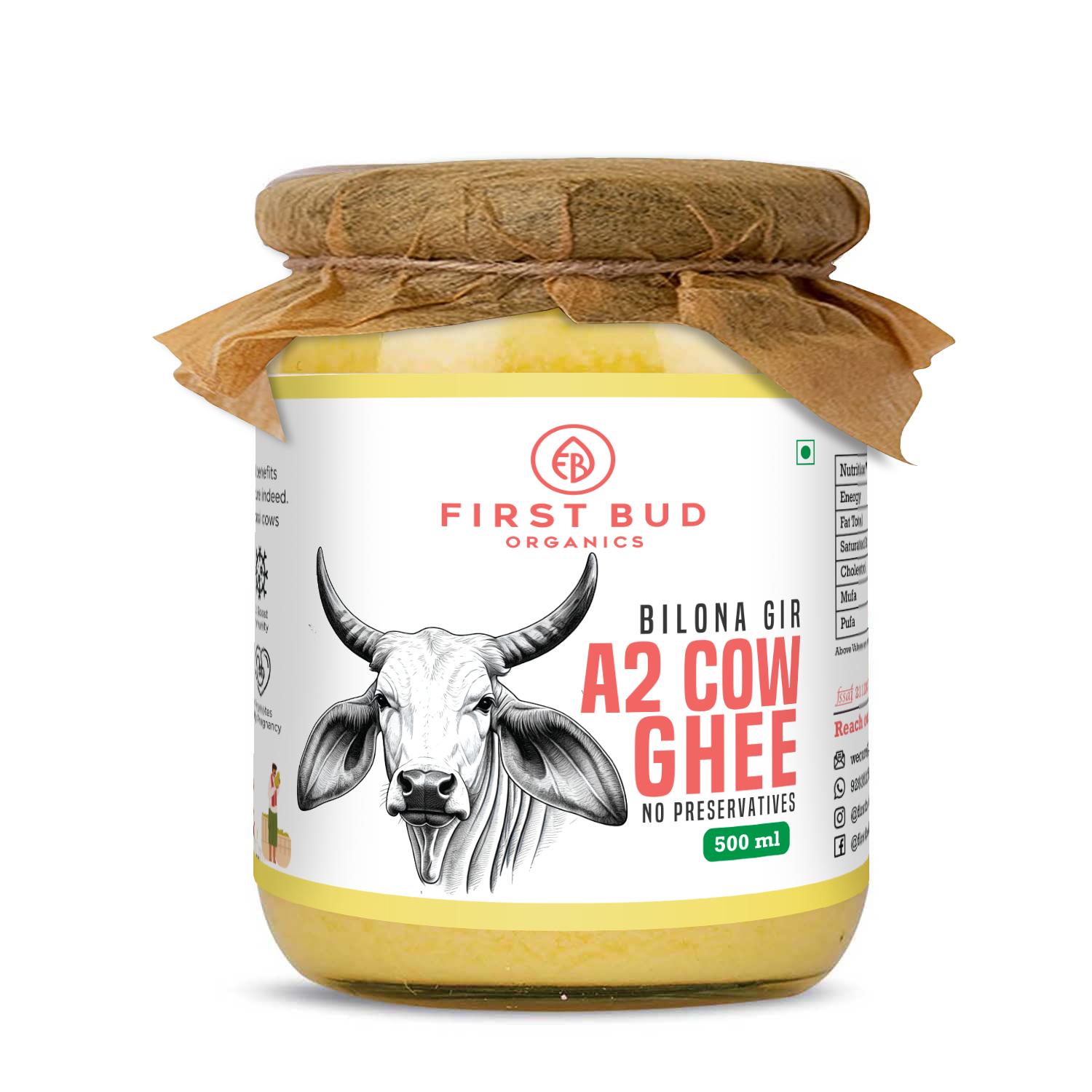
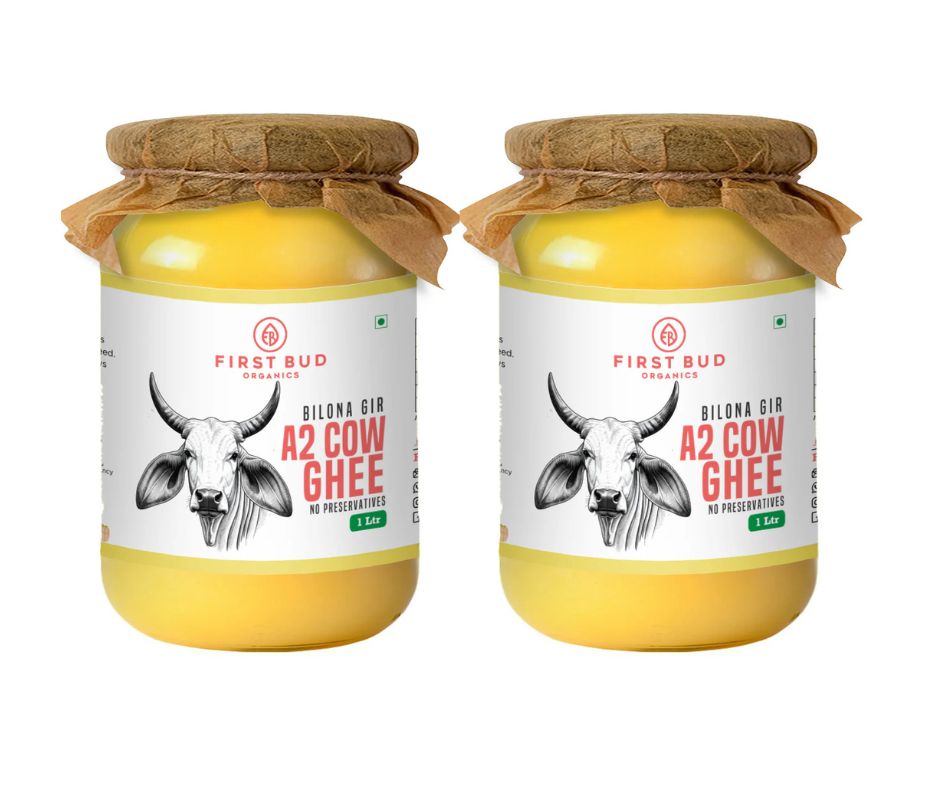
A2 Gir Cow Ghee | Traditional Bilona Method | Pure Desi Ghee
A2GREE-250
Most ghee is made from cream. Ours is made from curd. That one difference, which is the Bilona method, changes everything about the nutritional quality, the flavour and the aroma you experience. Pure A2 Gir cow ghee made the way it has been made for thousands of years — slow, careful and completely by hand.
- Regular price
-
Rs. 799.00 - Regular price
-
Rs. 799.00 - Sale price
-
Rs. 799.00
Couldn't load pickup availability
Description
Why A2 Ghee Is Different from Every Other Ghee on the Market
There are two important things about this ghee and both of them matter. The first is A2 milk. The second is the Bilona method. Together they create a ghee that is so different from commercial ghee that comparing them is almost unfair.
A2 refers to the type of beta-casein protein in the milk. Native Indian cow breeds like the Gir cow produce milk containing the A2 form of beta-casein, which is much easier to digest than the A1 form found in most commercially farmed European breeds. Many people who are sensitive to regular dairy and struggle with commercial ghee find A2 ghee entirely comfortable because the protein structure is fundamentally more biocompatible with human digestion.
The Bilona Method — Why It Matters
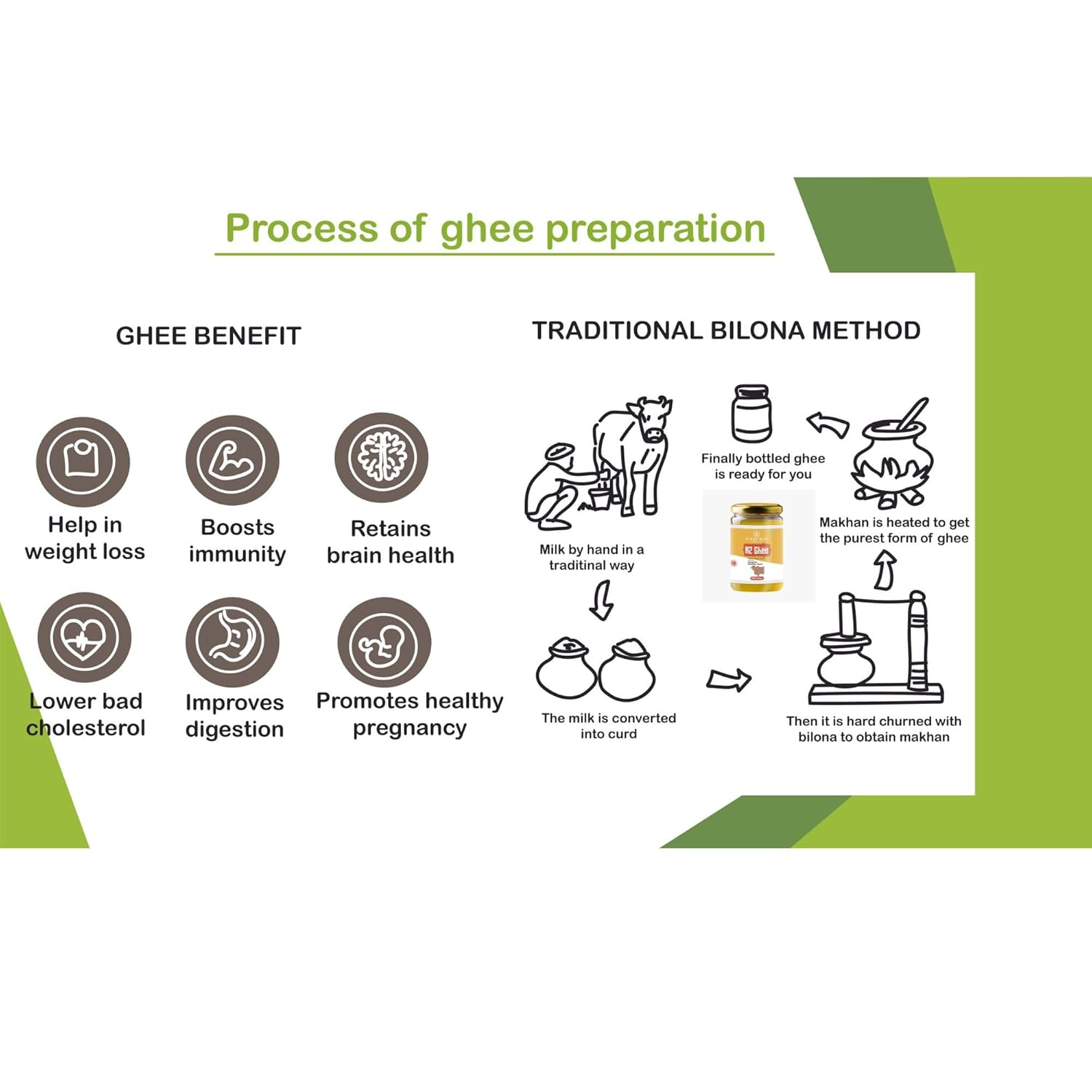
Commercial ghee production starts with separating cream from milk and heating it into ghee. It is efficient and produces large volumes. The Bilona method does something fundamentally different. The A2 milk is first set as curd. The curd is then hand-churned using a traditional wooden churner — the bilona — to separate the butter. This butter is then slowly simmered on a low flame to produce ghee.
This process does two important things. First, the fermentation step where curd is made produces natural probiotics and breaks down some of the milk proteins, making the final ghee even more digestible. Second, the slow simmering of hand-churned butter produces a ghee with a more complex flavour and a noticeably different nutritional profile — higher in conjugated linoleic acid (CLA) and certain fat-soluble vitamins.
How to Use This Ghee Every Day
-
On dal, sabzi and rice: A spoon of A2 ghee on hot food is one of the most delicious and nutritionally beneficial things you can add to any meal.
-
For cooking: A2 ghee has a high smoke point of around 250 degrees Celsius, making it one of the most stable cooking fats for Indian cooking methods including tempering, sauteing and frying.
-
In haldi milk: A teaspoon of ghee in warm milk with turmeric is a traditional recipe for joint health, skin nourishment and deep sleep.
-
On roti or paratha: The traditional finishing touch that makes any bread-based meal significantly more satisfying.
In khichdi: Ghee and khichdi together is the most complete and comforting meal in Indian cooking tradition.
Key Features
- Pure A2 Gir Cow Ghee — Bilona Hand-Churned Method
- Made from Curd of A2 Milk — Not Cream Separated
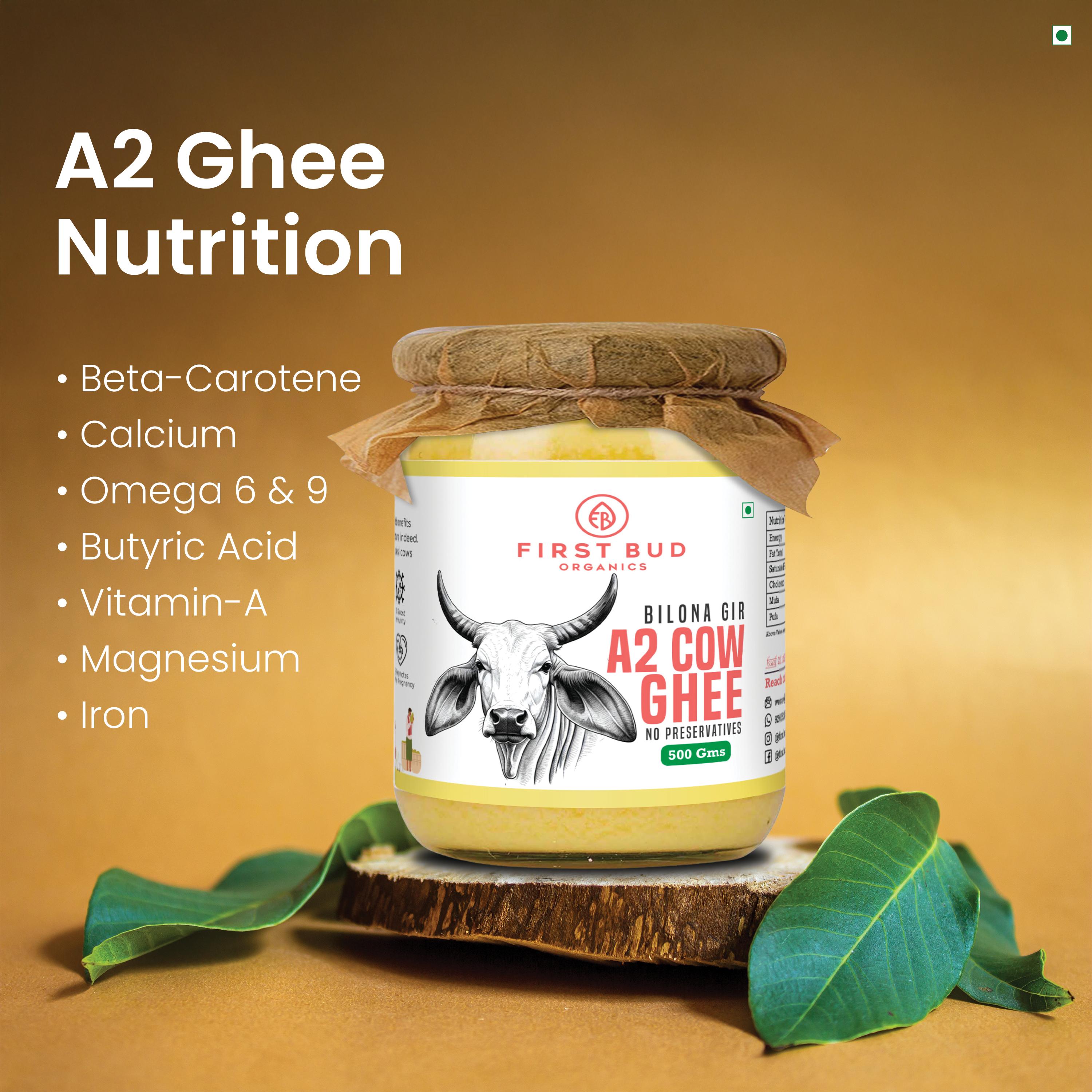
- Rich in CLA, Omega-3 and Fat-Soluble Vitamins
- Deep Golden Colour, Grainy Texture — Signs of Purity
- As Seen on Shark Tank India
Benefits
Highly Digestible — A2 Protein Advantage
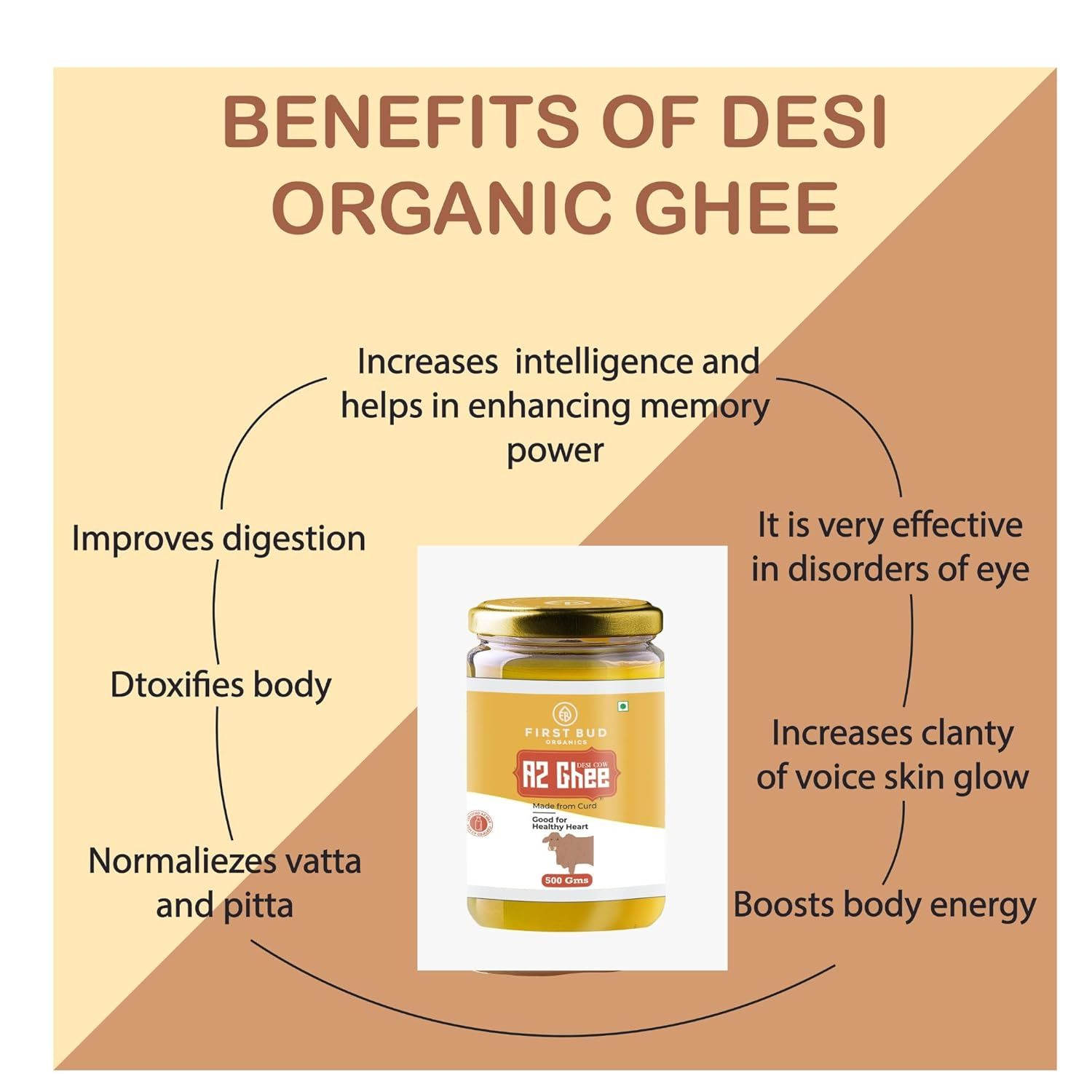
The A2 beta-casein in Gir cow milk is structurally more similar to human breast milk protein than A1 beta-casein from commercial dairy breeds. This means many people who find regular dairy uncomfortable — bloating, indigestion, inflammation — tolerate A2 ghee completely well. The Bilona fermentation step further breaks down any remaining milk proteins for even better digestibility.
Rich in CLA — Natural Fat Burner
Conjugated linoleic acid is a naturally occurring fatty acid found in dairy from grass-fed and pasture-raised cattle. CLA has been studied for its ability to support fat loss, preserve lean muscle mass and reduce inflammation. Bilona ghee has a higher CLA content than commercially produced cream-based ghee.
Fat-Soluble Vitamins A, D, E, K2
Ghee is one of the richest natural sources of fat-soluble vitamins, particularly Vitamins A, D, E and K2. Vitamin K2 specifically is difficult to get from most foods and is critical for calcium metabolism, bone health and cardiovascular protection. The fat-soluble vitamins in ghee are highly bioavailable because the fat carrier makes them easy to absorb.
High Smoke Point — Safest Cooking Fat
At approximately 250 degrees Celsius, A2 Bilona ghee has one of the highest smoke points of any cooking fat. This means it does not break down into harmful trans fats or free radicals at normal cooking temperatures, unlike many refined vegetable oils. Using ghee for cooking is genuinely safer and more stable than most modern cooking oils.
Gut Health and Butyric Acid
Ghee is one of the best natural food sources of butyric acid (butyrate), a short-chain fatty acid that is the primary fuel for intestinal cells. Butyrate supports the health and integrity of the gut lining, reduces intestinal inflammation and supports a healthy gut microbiome. Traditional Indian medicine has always understood that ghee is beneficial for digestion — science now confirms the mechanism.
Brain and Cognitive Health
The healthy saturated fats in ghee are an important fuel source for the brain. Traditional Ayurvedic medicine has always considered ghee a brain tonic and the modern understanding of how dietary fats support neural function, myelin sheath health and cognitive performance supports this view.
Skin and Joint Nourishment
Applied topically, ghee is a deeply nourishing skin moisturiser. Consumed regularly, the healthy fats and fat-soluble vitamins in A2 ghee support skin health from within — reducing dryness and improving skin texture. For joints, the anti-inflammatory CLA and butyrate content makes ghee a genuinely beneficial daily food for people with joint stiffness or arthritis.
Ingredients
What's Inside
Pure A2 Gir Cow Ghee made by the traditional Bilona method. 100% A2 butter from Gir cow curd. No additives, no preservatives, no blending with other ghee.
Made from curd, not cream. Bilona hand-churned. One ingredient — pure A2 ghee.
Milk source Gir cow — native Indian breed, A2 beta-casein milk
Method Bilona — curd set, hand-churned, slow-simmered
CLA content Elevated — Bilona method produces higher CLA than cream-separated ghee
Smoke point Approximately 250 degrees Celsius — highly stable for cooking
Colour Deep golden — indicator of A2 Bilona quality. Should not be pale.
Texture Slightly grainy when set — natural characteristic of genuine Bilona ghee
Important Information
Sourcing Gir cows from ethical farms where cows are pasture-grazed and well-cared-for.
Net Weight As per pack
Shelf Life 12 months when stored in a cool, dry place away from sunlight.
Storage Room temperature is fine in most Indian climates. Refrigeration is not necessary and can make ghee hard. Keep lid tightly closed.
Usage note A teaspoon per meal is the traditional serving. More can be used in cooking as needed.
Disclaimer
A2 Gir Cow Ghee is a premium natural food product. It is not intended to diagnose, treat, cure or prevent any disease.
Ghee is a dairy product and is not suitable for individuals with dairy allergies. Even though A2 ghee is better tolerated than regular ghee, individuals with true dairy allergies (not just lactose intolerance) should avoid it.
Ghee is calorie-dense. While it is a healthy fat, it should be consumed in appropriate amounts as part of a balanced diet, not in unlimited quantities.
If you have cardiovascular disease or are on a fat-restricted diet, consult your doctor about appropriate ghee consumption.
Shipping Information
For orders below INR 499, minimal charges apply; free shipping for orders above INR 500. Delivery within 4-7 business days, longer for remote locations or international orders, not available on holidays. No hidden charges; address changes possible before dispatch.
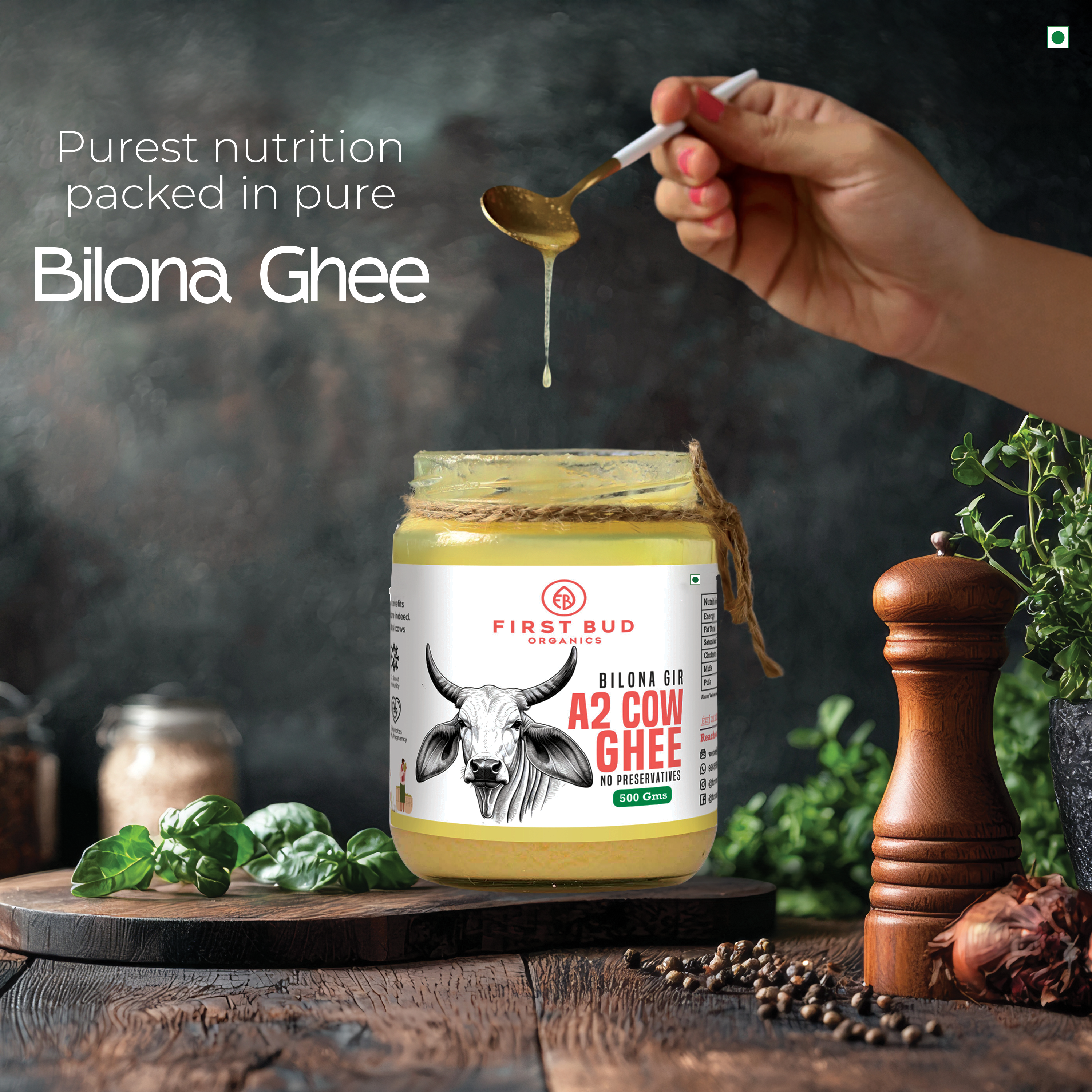

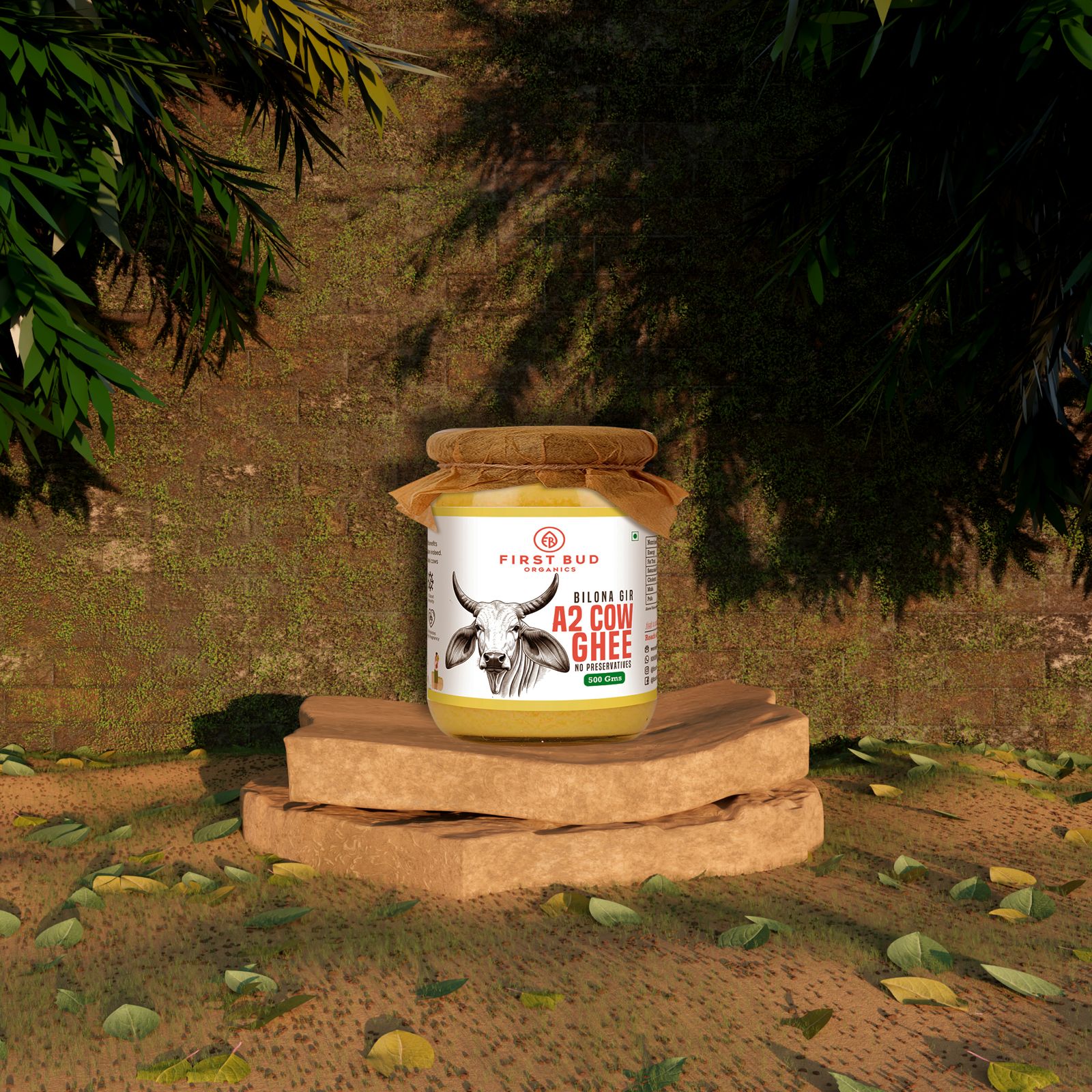
A2 Gir Cow Ghee | Traditional Bilona Method | Pure Desi Ghee
- Regular price
-
Rs. 799.00 - Regular price
-
Rs. 799.00 - Sale price
-
Rs. 799.00
I am 60 years old and this ghee reminds me of the
one we had in our village
Good product and good quality but I feel the
quantity could be slightly more
I make ghee rice for guests and everyone asks me
which ghee I use
This is the only ghee my wife trusts for cooking now
and she is very particular
My eczema has calmed down so much after I
switched to this ghee internally and topically
My dermatologist said diet can affect eczema and suggested
eliminating processed fats and adding good quality ghee. I
also apply a tiny amount on flare-ups directly. Both the internal
and topical use have helped my skin so much in two months.
Frequently Asked Questions
Is A2 ghee safe for people who are lactose intolerant?
Yes, in most cases. Ghee is produced by simmering butter until all the water and milk solids are removed, leaving only the pure fat. Because lactose is a sugar present in the milk solids and water — not in the fat — properly made ghee contains virtually zero lactose. Most lactose-intolerant individuals tolerate good quality ghee very well.
How do I know if A2 Bilona ghee is genuine?
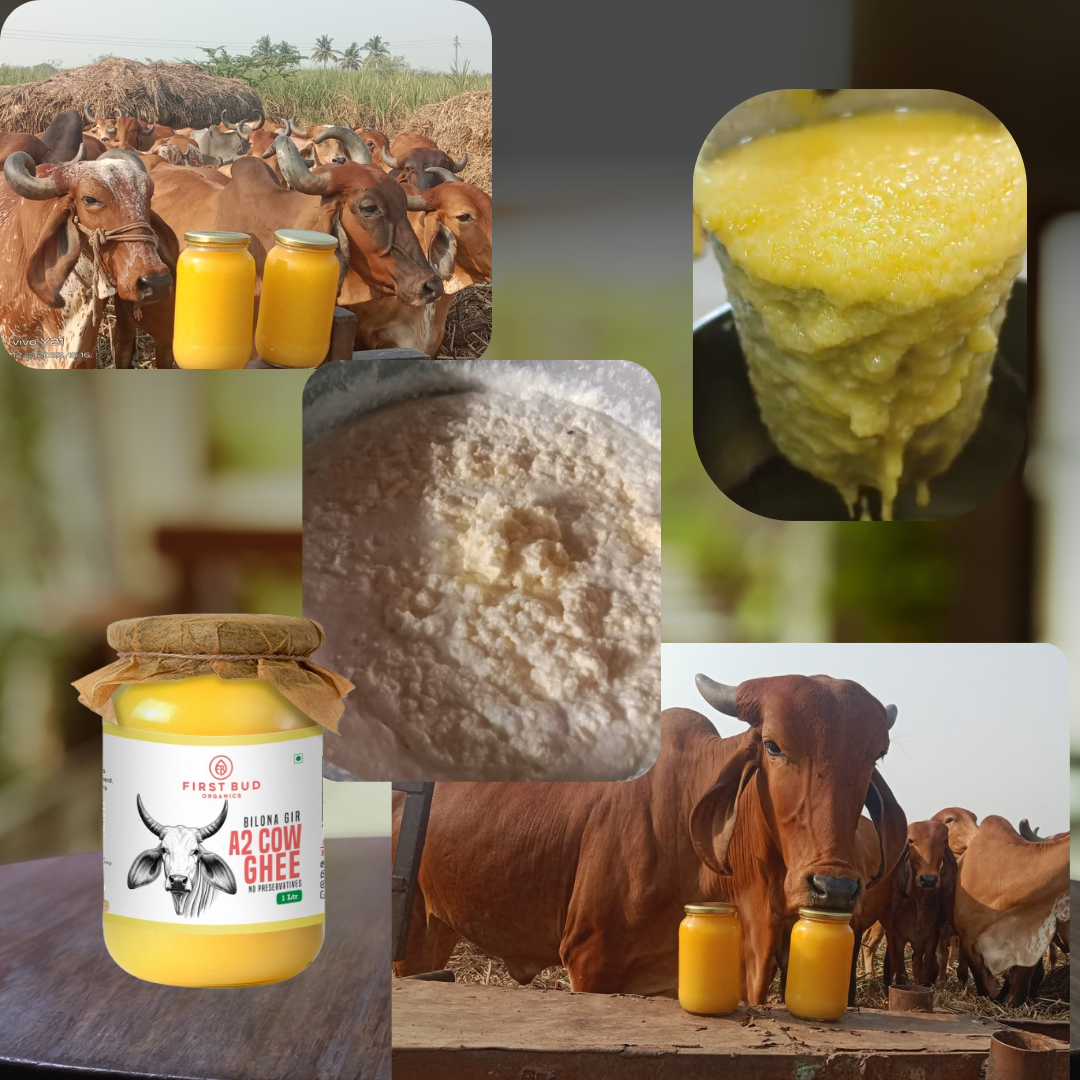
Genuine Bilona ghee has three characteristics that set it apart. The colour should be a deep, rich golden yellow — not pale or cream-coloured. The texture when set should be slightly grainy rather than perfectly smooth, which is a result of the hand-churning process. And the aroma should be intensely nutty and caramel-like, not bland. Commercial ghee made from cream is typically paler and smoother with a milder smell.
What is the Bilona method and why does it matter?
The Bilona method is a traditional Indian ghee-making process where milk is first set as curd, then hand-churned to separate the butter using a wooden bilona churner, and the butter is then slowly simmered to produce ghee. This is different from commercial ghee which is made by separating cream from milk directly. Bilona ghee has a richer flavour, higher CLA content, better digestibility due to the fermentation step and a more nutritious profile overall.
What is A2 Gir Cow Ghee and why is it better than regular ghee?
A2 Gir Cow Ghee is made from the milk of Gir cows, a native Indian breed that produces milk containing only the A2 type of beta-casein protein. Commercial dairy breeds produce A1 beta-casein which is harder to digest and linked to digestive discomfort in many people. A2 ghee is therefore more digestible, better tolerated and has a richer nutrient profile than regular commercial ghee.
How much A2 ghee should I eat per day?
One to two teaspoons per day used for cooking or as a finishing drizzle on food is a traditional and nutritionally sensible amount for most adults. In Indian cooking tradition, ghee was always used as a condiment and finishing fat, not as a bulk cooking oil. For people with specific health goals related to gut health or fat-soluble vitamin intake, slightly higher amounts may be appropriate with dietary